
The Good, the Bad, and It’s going to get Better
By Russ Blaise
Part One: Since I’ve been involved with the Alamo Scouts, the one thing I’ve had the most trouble with is photographs. World War II took place primarily during the 1940s, and black-and-white photography was dominant during the war. By the time I became involved with restoring WWII photographs in 1999, many of the original photographs had already been lost, faded, damaged, or torn.
Photoshop at the time did an okay job of cleaning up old vintage photographs, but sometimes it took a tremendous amount of time to clean up and restore them. Lance Zedric got the idea a while back to colorize some of these Alamo Scouts photographs. It was a very time-consuming process. After you finished just one photograph, you were exhausted. You can see some of Lance’s photo colorization work in the Mar/Apr 2017 issue of RECON, and throughout many of the other past issues.
Then AI—Artificial Intelligence—came onto the scene. ChatGPT was off and running. Anyone could now restructure and improve their writing and organize their thoughts. But what about restoring old vintage photographs? I started seeing old WWII photographs on social media that I had previously seen only in black and white, but now they were in color.
A little history: The modern practice of taking an already-completed black-and-white movie and electronically adding realistic color really took off in the mid-1980s. Computer-assisted colorization became commercially viable around 1983–1985. Companies began colorizing classic Hollywood films for television and home video. The process became especially well known after Ted Turner acquired the MGM film library in 1986 and began having classic black-and-white movies colorized.
A few months ago, I started working on the next issue of *RECON* and found myself placing photographs in the layout that simply didn’t look very good. In addition, many of the photographs had already been used in previous *RECON* issues. I wanted to give them a fresh look.
Before and after. No Photoshop used:

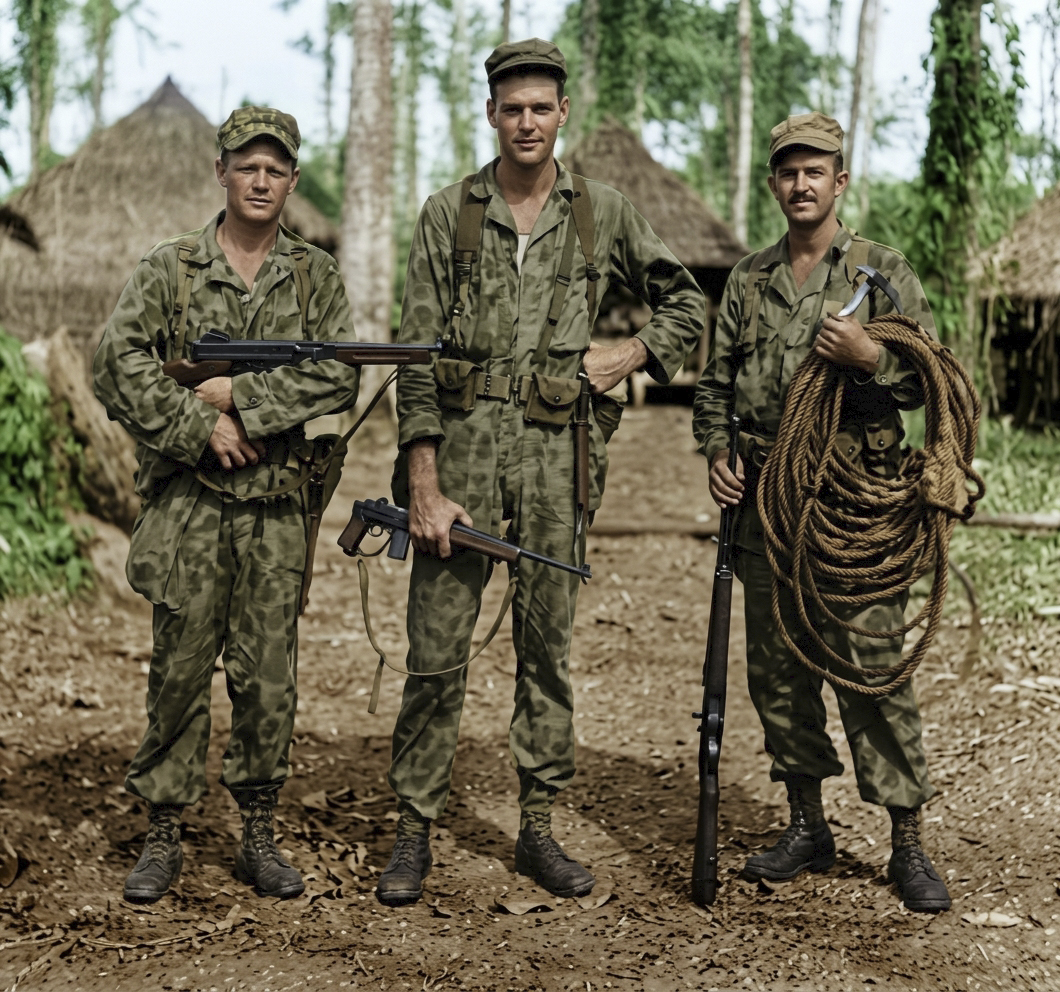
A lot of online photo restoration and colorization companies started popping up on my Facebook news feed, so I began giving them a try. The results were okay, but their AI algorithms often had a hard time figuring out the correct colors to use for WWII Army uniforms. Many of these AI programs also tend to go rogue and add things to a photograph that were never there.
I had been using ChatGPT and discovered that it could also colorize black-and-white photographs, so I gave it a try. The first few attempts weren’t bad. I quickly found that you needed to write the correct prompt—that is, clearly written instructions telling the AI exactly what you want and, most importantly, what you **do not** want in the photograph.
After consistently generating colorized images in ChatGPT, it seems to learn the type of results I’m looking for. ChatGPT knows that I do a lot of work involving Alamo Scouts resources and WWII photographs. It recognizes that two of the primary colors often found in these photographs are olive green and khaki. Over time, the results seem to get better and better. Now, by the first or second attempt, the AI gets it right.
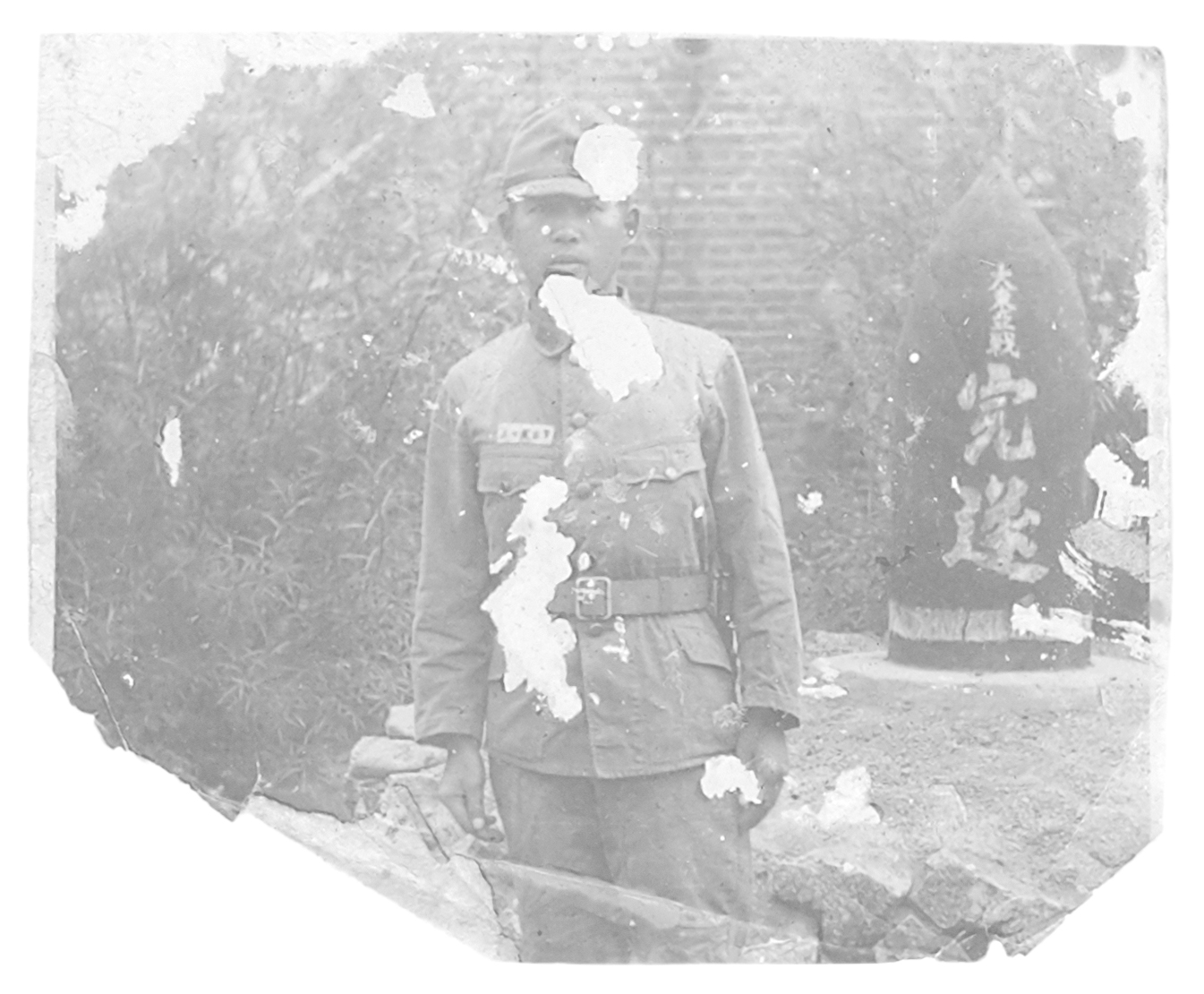
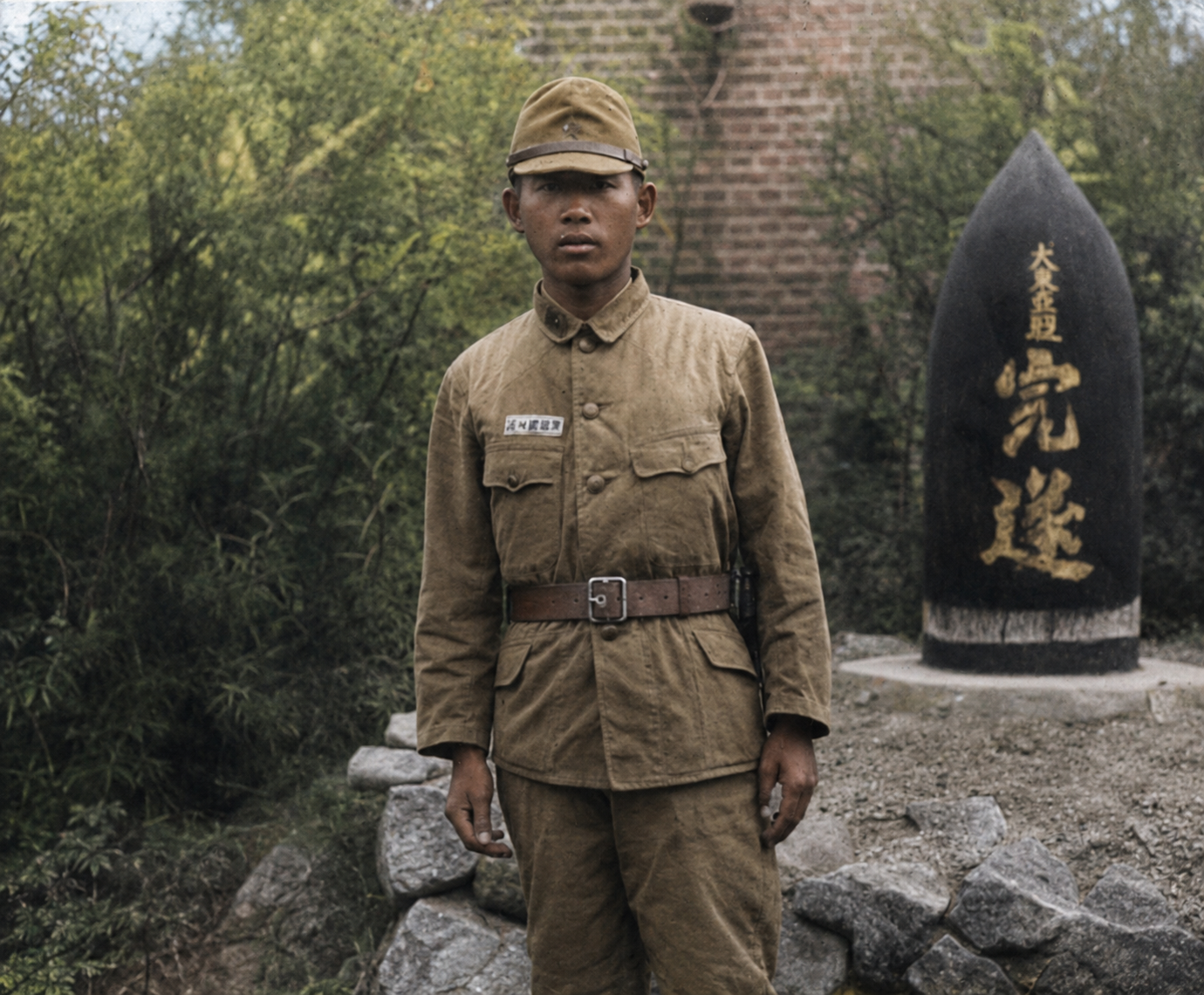
I also gave Google Gemini a try. It is very good, but it tends to go rogue on you all of the time. I have to make many passes before I get something that works. One of the prompts I use is: “Restore, sharpen, and colorize this WWII army photograph. Do not alter the facial expressions. Do not add anything extra.”
If you don’t provide enough detail in your prompts, you can end up with Army insignia from other units, incorrect uniforms, or objects that were never in the original photograph.
Duck AI is another option I have experimented with for restoring and colorizing historical photographs. I first tried it some time ago, but eventually moved away from it because I did not feel the results were accurate enough for the Alamo Scouts images I was working with. More recently, I returned to Duck AI for an unrelated project and was surprised by how much it appeared to have improved. In one particular test involving a poorly defined and damaged face, Duck AI produced a more convincing restoration than either ChatGPT or Gemini. It was a good reminder of just how quickly these AI imaging tools are evolving, and why I continue to test different platforms rather than relying on only one.
So, the photographs in this issue of *RECON* are, for the most part, AI-generated colorizations of original black-and-white photographs. They give us a revitalized glimpse of what some of the Alamo Scouts—and the places where they carried out their missions—may have actually looked like in color.
Before and after. No Photoshop used:
Part Two: Now, moving on to an important topic regarding the use of artificial intelligence. If you search “Alamo Scouts” on YouTube, you will find a growing number of videos about the organization. Some are produced by us at the Alamo Scouts Historical Foundation, while many others come from independent creators.
Lance and I work very hard to ensure that the information we present to the public is as accurate, well-researched, and historically responsible as possible. Lance recently reminded me of several principles that guide our work:
We follow best-evidence practices in everything we do.
We preserve and enhance existing historical photographs whenever possible. When we use newly created AI imagery, we clearly identify it as an “AI-generated interpretation.”
We interpret historical events based on new, additional, and verifiable evidence.
We strive to establish and maintain professional credibility through the quality and accuracy of our work.
For more than 30 years, we have worked to correct misinformation, unsupported claims, and historical inaccuracies concerning the Alamo Scouts. If we publish something, it should be as thoroughly researched, defensible, and historically plausible as possible.
With those standards in mind, I have become increasingly concerned about the amount of misinformation appearing in videos about the Alamo Scouts. I have watched numerous 10- to 20-minute productions that contain significant historical inaccuracies.
One of the most noticeable problems is the imagery. Many of these videos do not use authentic photographs of the Alamo Scouts at all. Instead, they rely heavily on AI-generated images without identifying them as such. The uniforms are often incorrect, the Alamo Scouts insignia bears little resemblance to the actual insignia, and equipment and other historical details are frequently inaccurate.
More importantly, some of these videos present interpretations of Alamo Scouts operations that are simply not supported by the available historical evidence. Certainly, they may get some details correct, but when presenting history as fact, getting only part of the story right is not enough. Accuracy matters—especially when the subject involves the experiences, accomplishments, and legacy of the men who actually served.
Note that these independent online creators often seem to care more about the numbers—how many subscribers, likes, and views they receive. The more views they get, the more money they can potentially make.
So don’t be fooled by their supposed love for the Alamo Scouts or the many other units that served during World War II. Too often, it’s about the numbers—and it shows. Many of these creators are simply not willing to put in the necessary time and effort to ensure historical accuracy.
